
Gross GST collection in March touched an all-time high of over Rs 1.42 lakh crore, the Finance Ministry said on Friday. The gross GST revenue collected in March 2022 is Rs 1,42,095 crore, of which CGST is Rs 25,830 crore, SGST is Rs 32,378 crore, IGST is Rs 74,470 crore (including Rs 39,131 crore collected on import of goods) and cess is Rs 9,417 crore (including Rs 981 crore collected on import of goods).

This meeting has led to the deferment of the Goods and Services Tax (GST) Council meeting by a day.

Some of his directives had the Supreme Court judges disclose their assets whereas the row over the discovery of cash from a sitting judge's official residence paved way for inquiry.

The panel suggested inclusion of alcohol and petroleum products in GST, as is being demanded by the Congress.

Revised draft model Bill clearly says an agriculturist for the purpose of agriculture won't be liable for registration under GST.

The implementation of the GST will indeed be a landmark reform.

The Lok Sabha has already passed the Bill.
Since the present law threatens to unleash an avalanche of litigation over a period of time, it makes sense to replace it with a simpler law and build complexities as more experience is gained, says T N C Rajagopalan.

Small and medium enterprises had complained of tedious compliance burden under the Goods and Services Tax

The challenges before the government, he said, is to put public sector banks back on track and continue to operationalise stalled infrastructure projects
The changes made in the revised GST draft throw up fresh issues but, overall, most of these look sensible, says T N C Rajagopalan.

The central government, in its revised draft of the constitution amendment bill, had proposed that fuel and liquor should be brought under the ambit of GST.

The GST has been a great achievement, but it does suffer from weaknesses, says Chief Economic Adviser Arvind Subramanian.

Even if the GST rate is 18-20 per cent, there would be no average impact on inflation.
Net direct tax collection in the April-June quarter of the current fiscal rose by 41 per cent to Rs 3,54,569.74 crore, Minister of State for Finance Pankaj Chaudhary informed the Lok Sabha. During the April-June period of 2021-22, the government had collected a net direct tax of Rs 2,50,881.08 crore. At the same time, net indirect tax collection including Goods and Services Tax (GST) and custom duty increased by 9.4 per cent to Rs 3,44,056 crore as against Rs 3,14,476 crore in the first quarter of the previous fiscal, he said in a written reply.

The gross GST revenue collected in the month of December 2021 is Rs 1,29,780 crore of which CGST is Rs 22,578 crore, SGST is Rs 28,658 crore, IGST is Rs 69,155 crore (including Rs 37,527 crore collected on import of goods) and cess is Rs 9,389 crore (including Rs 614 crore collected on import of goods), informed the ministry of finance on Saturday. The government has settled Rs 25,568 crore to CGST and Rs 21,102 crore to SGST from IGST as regular settlement. The total revenue of the Centre and the states in the month of December 2021 after settlements is Rs 48,146 crore for CGST and Rs 49,760 crore for the SGST.

Steep taxes on petrol and diesel add to the cost of economic activity and reduce the Indian economy's competitiveness. The two fuels must be brought under GST's purview, suggests former IAS officer Ajay Shankar.

Compliance requirements, valuation, input tax credit transfers are likely to lead to tax litigation, says Sayan Ghosal.

An area of worry relates to simplification of the refund procedure where the inverted duty structure prevails

The government on Wednesday decided not to hold special session of Parliament to pass the constitution amendment bill for rolling out Goods and Services Tax and will recommend to the President to prorogue the Monsoon Session.

'A broad-based revival of private sector investment was likely in 2018-19 after businesses had successfully made the switch to the GST.'
Central Board of Indirect Taxes and Customs said despite the electronic way or E-way bill mechanism there has been rampant evasion and there is a need to increase compliance.
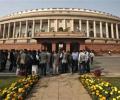
Select committees of the House have already submitted their reports

For the sake of transparency, and to reduce undesirable bond market volatility, clarity on these would be welcome, preferably before the budgets for the next fiscal year get finalised, says Neelkanth Mishra.

There will be a dramatic alteration in the role the Centre and the states will play to shape India's fiscal and economic destiny, report Nitin Sethi and Ishan Bakshi.

The board of Nazara Technologies, a listed online gaming company, has approved the issue of shares worth Rs 100 crore to firms managed by Zerodha founders Nikhil and Nithin Kamath, the company said in a regulatory filing on Monday. The company is proposing to issue 1,400,560 equity shares at a face value of Rs 4 each, for Rs 714 per equity share. This will amount to Rs 99,99,99,840 and will be proportionately allotted to M/s Kamath Associates and M/s NKSquared.

For the government to meet its GST roll-out deadline of April 1, 2017, the states will have to ratify the Bill before Parliament's winter session, starting November.

The stock of the country's largest passenger vehicle maker, Maruti Suzuki India (MSIL), has been hitting successive all-time highs over the past three trading sessions. The rally in the scrip has helped it notch over a 21 per cent gain since the start of February, outperforming the National Stock Exchange Nifty Auto Index. The gains for the leader of small passenger cars have been more recent, as the company still trails the Nifty Auto over one- and two-year periods.

"We are willing to speak to any of their leaders," Jaitley was quoted as saying by Bloomberg News.
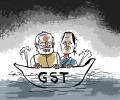
'Because of the COVID-19 pandemic situation today, the revenues of the states have gone down, the GST money is not coming and all the states combined have lost more than Rs 365,000 crore in revenue.' 'To make it worse, the Government of India is not compensating us for the shortfall, which it must as per its Constitutional obligations.'

Modi laid the foundation stone of a four-lane cable-stayed bridge between Okha and Beyt Dwarka.
The CAG audit and other data suggests it could be far from the efficient new alternative that was once conceptualised. A conclusive review remains elusive till the government begins to release more granular and comparable data on the complex backend of GST to a deeper scrutiny, by researchers, auditors and the public.
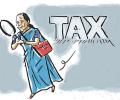
The net indirect tax collection in 2020-21 grew 12.3 per cent annually to Rs 10.71 lakh crore, thereby exceeding the target set in revised estimates, the Finance Ministry said on Tuesday. The mop-up through indirect taxes, which include GST, Customs and excise duties, was Rs 9.54 lakh crore in 2019-20. In the Revised Estimates (RE) for 2020-21, the target was set at Rs 9.89 lakh crore. Net collections from Goods and Services Tax (GST) stood at Rs 5.48 lakh crore during 2020-21, an eight per cent drop compared to Rs 5.99 lakh crore in the previous fiscal year.

Gains in auto shares helped offset losses in select index heavyweights led by Infosys.
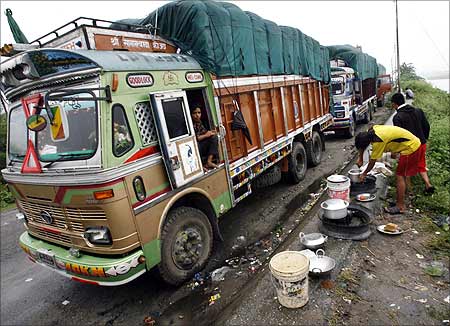
The Cabinet on Wednesday approved amendments to the GST bill to compensate states for revenue loss for five years on introduction of the uniform nationwide indirect tax regime.
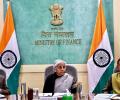
The Budget assumes significance as it comes on the back of lower-than-expected growth numbers during the second quarter and geopolitical uncertainty.

Industry associations and companies in the United States, including the US Chamber of Commerce, Coalition of Services Industries and the iconic bike company Harley Davidson have called on the Donald Trump dispensation to push India to reduce tariffs, non-tariffs, and regulatory barriers to boost American exports.

FMCG, durables, pharma firms say they remain unclear about transition gains and losses
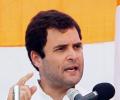
The vice president met Leader of the party in Lok Sabha Mallikarjun Kharge, P Chidambaram and Deputy Leader of the party in Rajya Sabha Anand Sharma, among others and discussed various points regarding the key tax reform legislation.

Plug-in hybrids have two engines and the electric part has a much larger battery than in the regular hybrids. Car companies, led by the Japanese, are pushing the Indian government to look at hybrids in the interim if it wants to reduce carbon emission.
